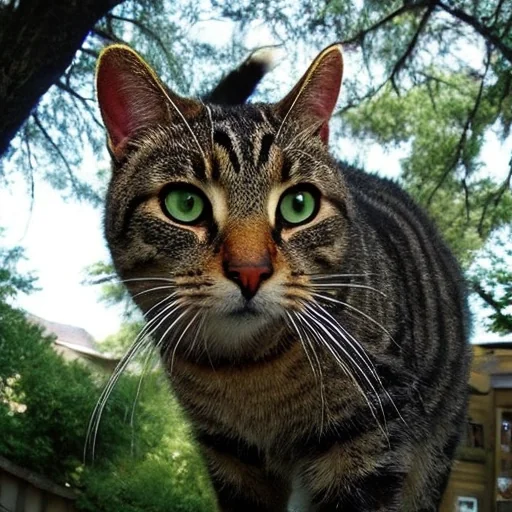
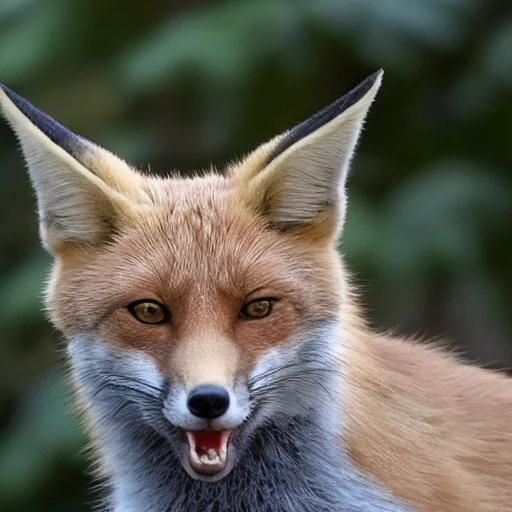
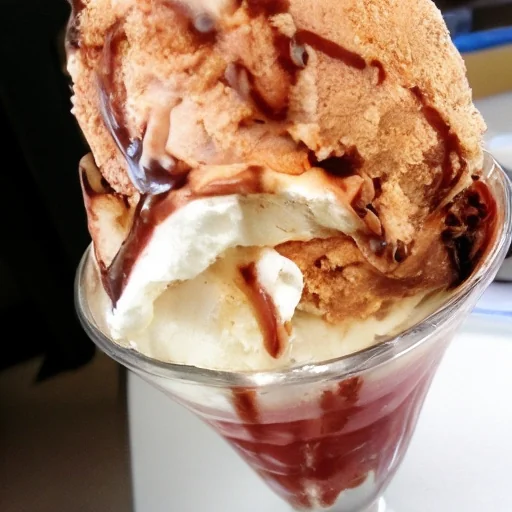
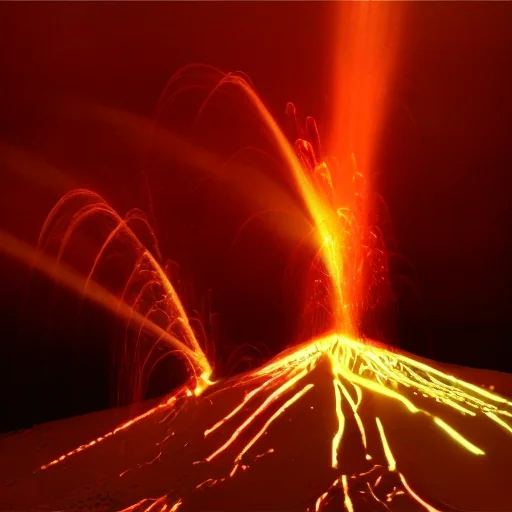
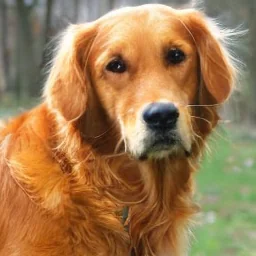
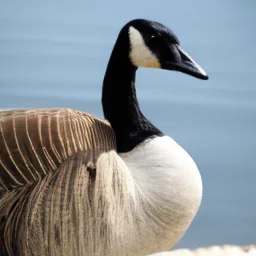
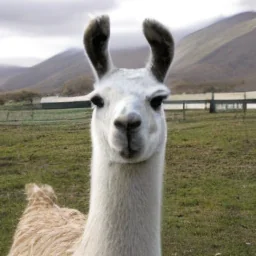
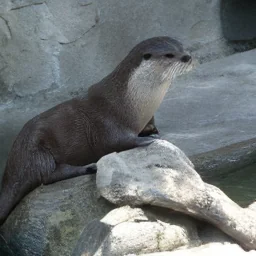
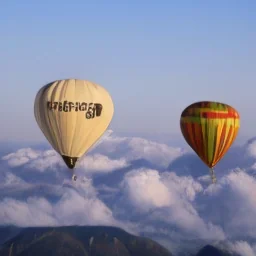

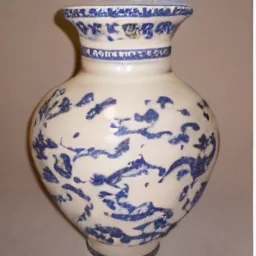
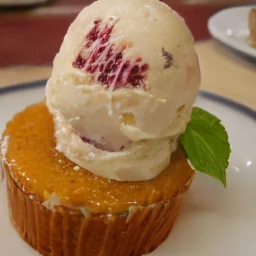
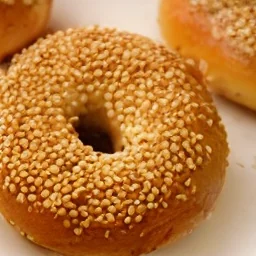

Left: samples from Dino Forcing. Right: convergence on ImageNet 256×256 (FID-50K vs. training epochs, no guidance, log-log). DF reaches 2.47 after 100 epochs; prior methods need 2–8× longer to get close.
Do not denoise what you can predict
1ENPC, IP Paris 2École Polytechnique, IP Paris 3UC Berkeley 4AMIAD
* Equal contribution · † Equal supervision
Left: samples from Dino Forcing. Right: convergence on ImageNet 256×256 (FID-50K vs. training epochs, no guidance, log-log). DF reaches 2.47 after 100 epochs; prior methods need 2–8× longer to get close.
Co-denoising pretrained representations such as DINO can substantially improve the training speed and quality of flow matching models, but it introduces a second denoising trajectory and requires carefully designed schedules. We propose a simpler alternative: predict the pretrained representation directly, then condition the model on its own prediction. This removes the need for a second ODE and any representation-specific denoising schedules, while retaining the benefits of representation guidance.
Our approach converges substantially faster and achieves better generation quality as measured by FID score. On ImageNet, it outperforms the state of the art in latent space at 2× fewer epochs than prior methods; in pixel space, it improves FID over comparable prior methods by more than 20%. These results support a simple principle: do not denoise what you can predict.
Independent noises εI, εD and two time variables. The model must be accurate over the whole square of noise-level pairs, and needs a hand-crafted schedule for when DINO information is revealed.
φ is deterministic, so given a clean image there is no distribution over φ(x) to sample from. The best estimate from a noisy xt needs no noise level of its own: one forward pass predicts it.
Feed the noisy image xt with a zero tensor as the representation input. Get a preliminary prediction ẑ(Φ). No gradients.
Condition on ẑ(Φ). Predict the image velocity and a refined ẑ, supervised against frozen DINOv2 features with a cosine loss.
Image and representation tokens are concatenated along channels, so the token count matches a standard image-only SiT / JiT.
Sampling. Start from pure noise and an all-zeros self-condition. At each of the 50 Euler steps the model outputs an ODE step and a prediction ẑ, which becomes the self-condition of the next step. ẑ is not a denoised feature map: it is the model's prediction of the DINO features of the final image. It is spatially coherent and separates object from background before the image itself is resolved. Real intermediate predictions from our models; xt is shown as the flow interpolation between noise and the current clean-image prediction.
Each bubble is a method: further left means fewer training epochs, lower means better FID. Bubble size shows parameters. Hover for IS, precision and recall.
Same architecture and budget, no guidance. Each trail falls from the baseline FID to Dino Forcing; DF-B already beats the SiT-XL baseline.
At 512×512, and with the class label removed so the model's own DINO prediction is its only condition.
SiT-L/2 at 80 epochs, identical architectures; only the supervision target of the representation branch changes. Every trail starts from the model without the branch.
The conditioning mechanism helps on its own (18.80 → 12.96), but the content of the target drives most of the gain: DINOv2 features reach 3.04, 6× below the baseline.
The conditioning branch takes representation features as input, so we can skip the prediction and feed the real DINOv2 features of an image with a null class. The model then rebuilds the image from its DINO features alone. Drag across the image to compare.
If you find our work useful, please cite us; otherwise we might just be sad (just kidding). With an expanded citation format, please check that it reads Ghosh, Degeorge et al.
@article{ghoshdegeorge2026dinoforcing,
  title       = {Dino Forcing Flow Models: Do not denoise what you can predict},
  author      = {Ghosh, Arijit and Degeorge, Lucas and Couairon, Paul and
                 Efros, Alexei A. and Kalogeiton, Vicky and Picard, David},
  shortauthor = {{Ghosh, Degeorge et al.}},
  journal     = {arXiv preprint arXiv:2610.11751},
  year        = {2026}
}
We thank Nicolas Dufour, Felix Krause, Zeynep Sonat Baltacı, Gatien Chenu, Fei Meng, Julie Mordacq, Yohann Perron, Alexandros Benetatos, Loic Landrieu, Tristan Quétin, Tom Ravaud, Louis Geist and Lucas Ventura for many cool discussions and feedback throughout the project. This work was supported by a Hi!Paris grant, two Hi!Paris chairs for A. A. Efros and V. Kalogeiton, ANR/France 2030 program (ANR-23-IACL-0005) and ANR project sharp ANR-23-PEIA-0008 in the context of the PEPR IA. It was granted access to the HPC resources of IDRIS under the allocations 2025-A0181016194, 2025-AD011015436, 2026-A0201017545 and 2026-AD011015594R2 made by GENCI.